Why COVID-19 Treatments Is Still Changing
Latest COVID-19 treatments has never been static. From the beginning of the pandemic, clinical strategies have evolved in response to new data, emerging variants, and a deeper understanding of how the virus interacts with the human immune system. What started as largely supportive care has gradually shifted toward targeted intervention, earlier treatment, and prevention of severe outcomes.
Today, the latest COVID-19 treatments reflect years of clinical experience rather than emergency response. Instead of focusing only on critically ill patients, modern treatment approaches aim to reduce symptom progression, shorten recovery time, and limit hospital admissions before complications develop.
Immune Response: When the Virus Isn’t the Only Problem
In many moderate to severe cases, COVID-19 complications are driven less by the virus itself and more by an overactive immune response.
This realization changed treatment strategy in a fundamental way.
Instead of only targeting viral replication, researchers began focusing on therapies that regulate immune signaling and inflammation. These treatments aim to prevent tissue damage while still allowing the body to fight infection effectively.
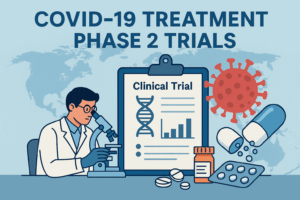
Many immune-focused therapies are evaluated during COVID-19 treatment Phase 2 trials, where dosing, safety, and early effectiveness are closely monitored.
For a detailed explanation of how this stage works, see our in-depth guide on COVID-19 treatment Phase 2.
Key Areas of Treatment Development Today
Not all treatments target the same stage of illness. Current research spans multiple therapeutic directions, including:
Antivirals designed for outpatient use
Immune-modulating drugs that reduce harmful inflammation
Combination therapies that address both viral load and immune response
Supportive treatments that improve recovery and reduce complications
This diversified approach reflects the complexity of the disease itself.
Repurposed Drugs vs. Purpose-Built Treatments
COVID-19 research has followed two main development paths. Repurposed drugs, originally approved for other conditions, offered speed and familiarity. Because their safety profiles were already known, they could move quickly into clinical testing. However, many showed mixed or limited effectiveness once studied in larger populations. Purpose-built therapies take longer to develop, but they allow scientists to design drugs specifically for SARS-CoV-2. These treatments often demonstrate more consistent results, particularly as variants emerge. Most of them must pass through structured Phase 2 trials before advancing further, ensuring both safety and early proof of benefit.
Outpatient Treatment and Hospital Avoidance
One of the most important shifts in COVID-19 care has been the move toward outpatient treatment.
Early treatment works. By treating patients before symptoms worsen, healthcare systems can reduce hospital strain and improve overall outcomes. Many modern studies now use hospitalization avoidance and recovery time as primary indicators of success, rather than focusing solely on survival in severe cases.
Safety Monitoring and Why It Still Matters
Even when a treatment shows promise, safety remains the deciding factor. Researchers continuously track side effects, immune markers, and interactions with other medications. Some signals only appear after weeks or months of observation, which is why ongoing monitoring is built into every trial phase. This process helps ensure that therapies moving forward offer more benefit than risk, especially when used in broader populations.
Variants and the Need for Adaptable Treatments
SARS-CoV-2 continues to evolve, and treatment strategies must evolve with it. Some therapies lose effectiveness as viral mutations accumulate, while others maintain broader activity across variants. This reality has pushed researchers toward drugs with multiple mechanisms of action and combination strategies that reduce the chance of resistance.
Global organizations such as the World Health Organization continue to track variant impact and treatment performance worldwide
What the Future Looks Like
Looking ahead, COVID-19 treatment development is expected to focus on:
Broader-spectrum antivirals
Combination drug regimens
Personalized treatment based on risk factors
Faster, more adaptive clinical trial designs
Insights gained during COVID-19 treatment Phase 2 studies will remain central to deciding which therapies advance and how quickly they reach patients.